Festive Sales Expose Logistics Inefficiencies: A Guide for Growing D2C Brands
Learn how D2C brands can prepare for festive sales, reduce RTO, improve order fulfillment, optimize shipping operations, and scale efficiently with Sharkship's logistics solutions. This blog is optimized to rank for searches around eCommerce shipping, D2C logistics, festive season fulfillment, courier partners, shipping software, and RTO reduction while naturally introducing Sharkship as the solution.
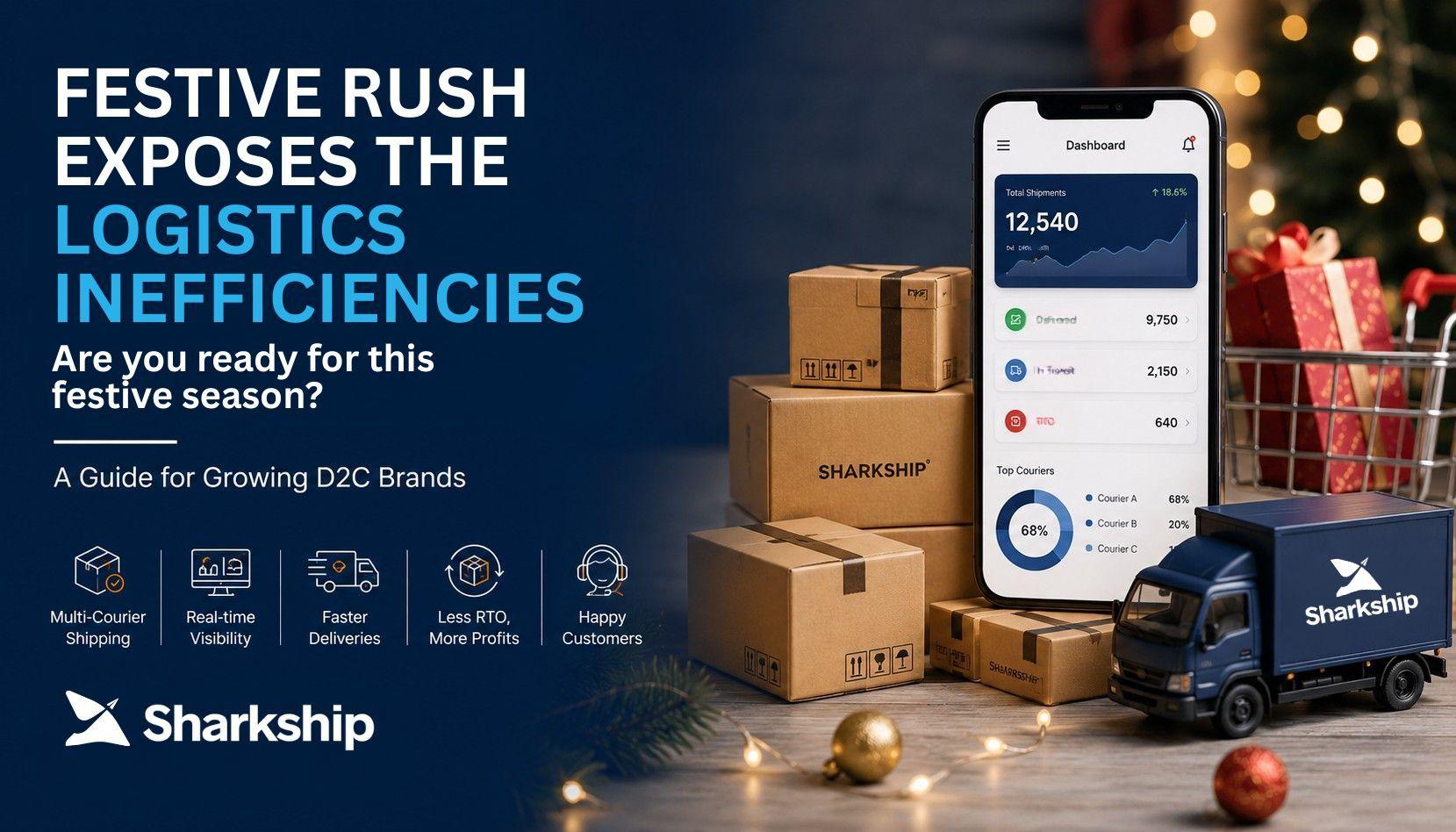
Every eCommerce business looks forward to the festive season.
Higher demand, increased website traffic, more orders, and stronger revenue numbers make it one of the most important periods of the year for D2C brands, online sellers, and growing businesses.
But while festive sales bring opportunities, they also bring pressure.
The reality is simple:
Festive sales just expose the operational weaknesses that already exist within a business.
Many brands spend weeks preparing marketing campaigns, discounts, influencer collaborations, and advertising strategies. Yet, when order volumes increase, operational challenges begin to surface.
- Delayed shipments
- Inventory mismatches
- Rising return orders
- Customer complaints
- Overloaded support teams
The brands that succeed during peak season are not necessarily the brands generating the most orders.
They are the brands prepared to fulfill those orders efficiently.
Why peak season is an operations test?
Most businesses focus on sales growth during festive periods.
However, every additional order creates pressure on the entire fulfillment ecosystem.
A business processing 100 orders a day may operate smoothly.
But when that volume suddenly increases to 1,000 orders a day, every inefficiency becomes visible.
This is why peak season should be viewed as an operational readiness test rather than just a sales opportunity.
Common Logistics Challenges During Festive Sales
1. Inventory Planning Issues
One of the biggest reasons businesses struggle during peak season is inaccurate inventory planning.
Unexpected demand spikes can lead to:
- Stock shortages
- Overselling products
- Delayed order processing
- Customer dissatisfaction
Effective inventory forecasting becomes critical when order volumes rise.
2. Courier Capacity Constraints
Many businesses rely heavily on a single courier partner.
During festive periods, courier networks often experience capacity limitations due to increased shipment volumes.
This can result in:
- Delivery delays
- Higher shipping costs
- Missed delivery commitments
- Reduced customer satisfaction
Working with multiple courier partners allows businesses to distribute shipments more effectively and maintain delivery performance.
3. Inefficient Order Fulfillment
As orders increase, manual processes become bottlenecks.
Without a streamlined order fulfillment process, businesses may experience:
- Slower dispatch timelines
- Increased processing errors
- Higher operational costs
- Reduced efficiency
Automation and centralized shipping management become increasingly important as businesses scale.
4. Lack of Shipment Visibility
Customers today expect complete transparency regarding their orders.
When shipment tracking is limited or fragmented, businesses face:
- Increased support queries
- Lower customer confidence
- Negative customer experiences
Real-time shipment tracking and centralized dashboards help businesses maintain visibility across all orders.
5. Rising Return-to-Origin (RTO) Rates
RTO remains one of the biggest challenges for eCommerce businesses.
During festive sales, increased order volumes often lead to:
- Failed delivery attempts
- Incorrect addresses
- Communication gaps
- Increased logistics costs
Reducing RTO rates directly impacts profitability and customer satisfaction.
How Growing Brands Prepare for Peak Season?
Successful businesses don't wait for festive sales to optimize their operations.
They prepare months in advance by:
- Diversifying courier partnerships
- Automating shipping workflows
- Improving inventory forecasting
- Enhancing order tracking visibility
- Implementing proactive customer communication
- Monitoring delivery performance metrics
This allows them to scale efficiently when demand increases.
Why Multi-Courier Shipping Is Becoming Essential?
Modern eCommerce brands need flexibility.
Different courier partners perform differently across regions, delivery timelines, and service levels.
A multi-courier shipping strategy enables businesses to:
- Select the best courier for each shipment
- Improve delivery success rates
- Reduce shipping costs
- Enhance customer experience
- Minimize operational risk
This is one of the key reasons why growing D2C brands are moving towards courier aggregation platforms.
How Sharkship Helps Businesses Scale During Peak Season?
At Sharkship, we help eCommerce businesses simplify and optimize their shipping operations through a centralized logistics platform.
With Sharkship, businesses can:
- Access multiple courier partners through a single dashboard
- Improve delivery performance
- Reduce RTO rates
- Track shipments in real time
- Automate shipping workflows
- Scale operations during festive sales and peak demand periods
Whether you're a D2C brand, marketplace seller, manufacturer, or growing online business, having the right shipping infrastructure can make the difference between operational chaos and sustainable growth.
If you're preparing for the next phase of growth, now is the time to evaluate whether your logistics operations are ready to scale.
Learn more about Sharkship's eCommerce shipping solutions at www.sharkship.in.